Reverse Hacking the hackers: For fun and free software?
It’s been a long time writing something on security stuff. But I would like to share one of my experiences. This blog post can be a fun read for people who are already into security and quite surprising and enlightening for people who aren’t into security.
For hackers like me, fulfillment comes by doing actual hacking and these opportunities do not come always because of ethics and legality.

Though it’s been more than a year since this happened, it all started when a friend came to ask to check why some things are not working on his laptop. My quick question was “what did you install?” and the obvious response was “X cracked software”.
Typical instructions to install pirated software:
- Please turn off your antivirus(very very important)
- Open a command prompt as administrator and run the setup.exe
When you follow these steps, congratulations, you got yourself free software and a company in your digital life.
So looking at the infected laptop, I can see that the antivirus is “disabled by administrator” and there are small windows hiding on the desktop.
Checking the startup items, there are a few .exe files that run on startup. In the list of processes, there is a process running that is using a considerable amount of network.
Taking these binaries and doing some string analysis using Ghidra, I found an IP address that I assumed must be the C2 server. I did ran an port scan on the IP to discover many open ports amongst the interesting one for me the webserver running at port 80.
Just navigating to the application running on port 80, reveals an login page with title saying “OnyxDropper”. A quick google search gave me what it is.
 github page for OnyxDropper
This happens to be dropper with a web UI to quickly drop payloads to all the victims and couple more extra features. The client is a Csharp executable while the web application is a php based and listens to the client for incoming data.
I am like, PHP? and I am 100% it has bugs. The description says the login default credentials are root:root. However, no luck with that. Getting hands on with php web code located at https://github.com/DKOnyx/OnyxDropper/tree/master/Server. There are multiple vulnerabilties identified.
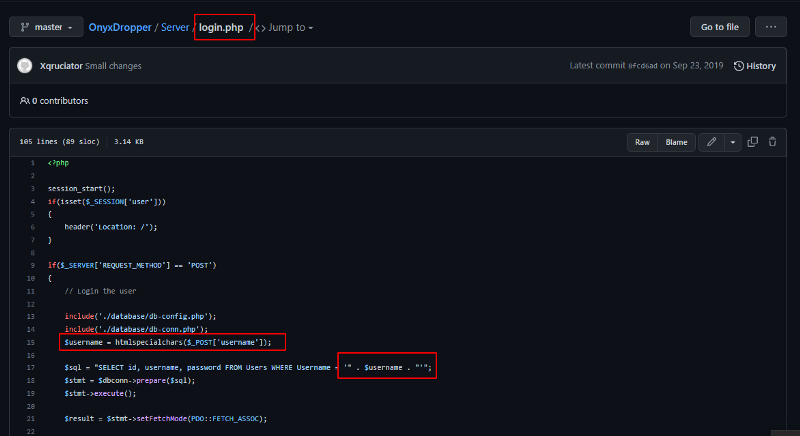
Checking the login.php, the author has implemented some basic security by adding htmlspecialchars() function on the username.
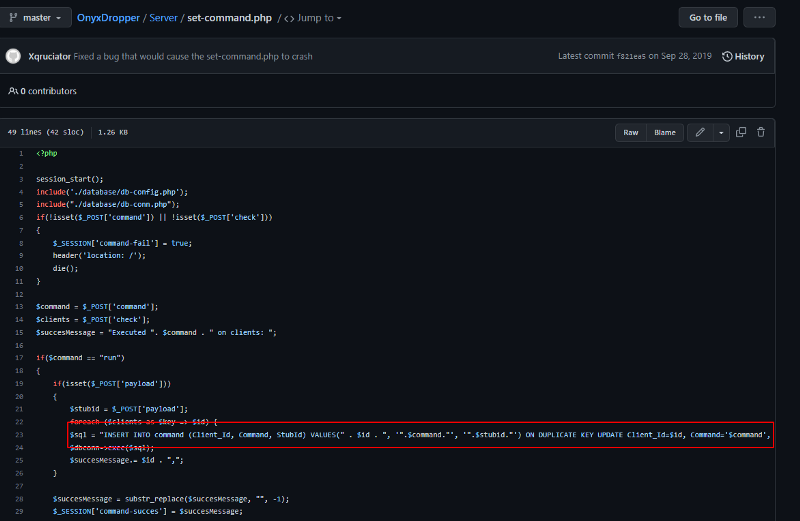
The file set-command.php does not seem to verify any session and their validation/filter on the post variable “command”. Checking the add- payload.php, I can see there is a file upload feature but this file is validating the session to perform the upload.
The feature is probably an option to host their custom payloads to easily send them to the victim’s machine.
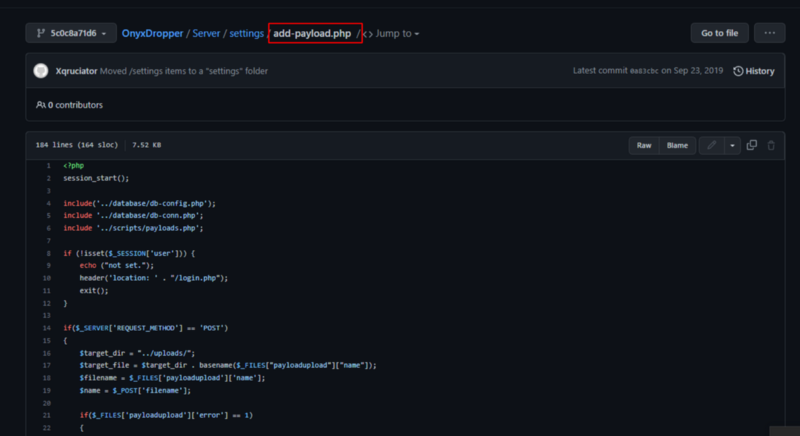
Exploiting both SQL injection and the file upload features, I got a remote code execution on the machine.
Moving further I have created a new user “ Defaultuser “ on the machine and added it to the “Remote Desktop Users”. And yeah 3389 port is open to the internet.
Upon connecting the machine, I could then see another user is already connected. They seem to be using AsyncRAT(https://github.com/NYAN-x-CAT/AsyncRAT-C-Sharp).
And around 500+ active victims are connecting to RAT at any given time. Just to give an idea, the Hacker can
- watch all victims’ live camera feeds all the time
- log everything they are typing
- get a snapshot/live stream of their screen
- download all chrome passwords, cookies, history
- capture credit card information
In fact, they already did dump all the passwords and data. The count was more than 2000 victims from countries India, Brazil, Australia, the USA, Canada, and many others.
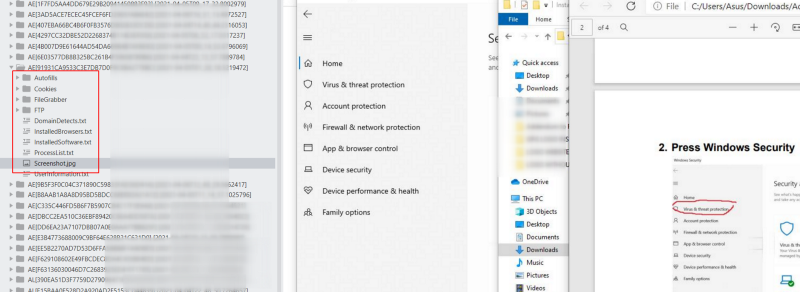
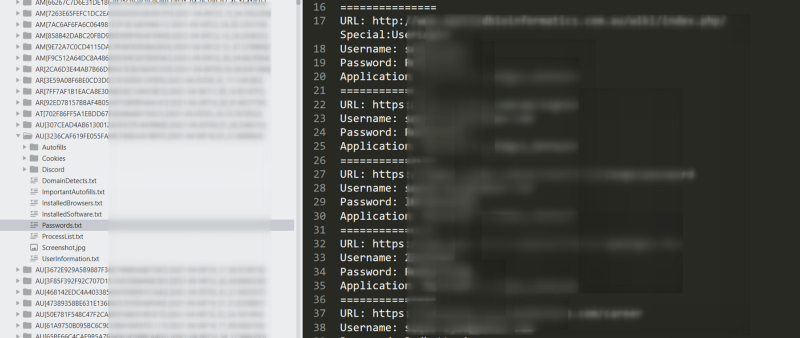
This contained credentials and access to 1000s of public/private applications.
Trying to get to know further about their real identity. I checked the apache access logs to check the IP address of the users trying to login into this dropper web UI. And the IP address geo locates in West Bengal in India.
One more step forward, I have created a payload and replaced the AsyncRAT.exe with the payload. Hoping to get a reverse RDP connection and monitor the hacker’s moves much closer to potentially get his real details. But I did a typo in giving the payload parameters and it messed up everything on the first attempt. The hacker was sad that the async rat was not working, but reinstalled a new setup.
On the second attempt, I did create the right payload and but for this type he was really scared that something has happened and deleted the whole server. I continued to monitor the IP for more than 6 months and it never again listened for victims on those default async rat ports.
I could have tried other techniques like dumping the hash and PTH and stuff. But really at that time, I was a real noob to this window’s exploitation and stuff.
Still, I think it was a good pwn as the attacker had to delete the server.
Moral
The Internet gives you all the free stuff, please do the reason why somebody has to give it for free to you.
- Never ever install pirated software – it’s risky and also illegal to do so.
- Use a password manager – both paid and open source available(Bitwarden is a good one) -https://www.youtube.com/watch?v=30QqIeb1Pu4
- I think YOUR internet privacy is NOT just yours – it’s also the ones of your friends and family.
Okay, that’s the end of the pwn story. I wrote down what I could remember. Hope it was fun reading.
About Me
I am a cybersecurity consultant. I think hacking is not just about hacking computers and software but is about finding loopholes in everything.
I also do bug bounty on the Hackerone platform hunting for bugs on private and public bug bounty programs. Though most of my work is in web hacking, need of the hour – I can do anything and everything to find those hacks.
Feel free to connect with me on my Twitter https://twitter.com/le4rner
Read my old blogs
- How I earned 60K+ from a private program – https://medium.com/@sivakrishnasamireddi/how-i-earned-60k-from-private-program-71bd51554490
- Just another tale of severe bugs on a private program – https://medium.com/@sivakrishnasamireddi/just-another-tale-of-severe-bugs-on-a-private-program-405870b03532
Writing this blog gave me extra motivation to be a part of the cybersecurity world.